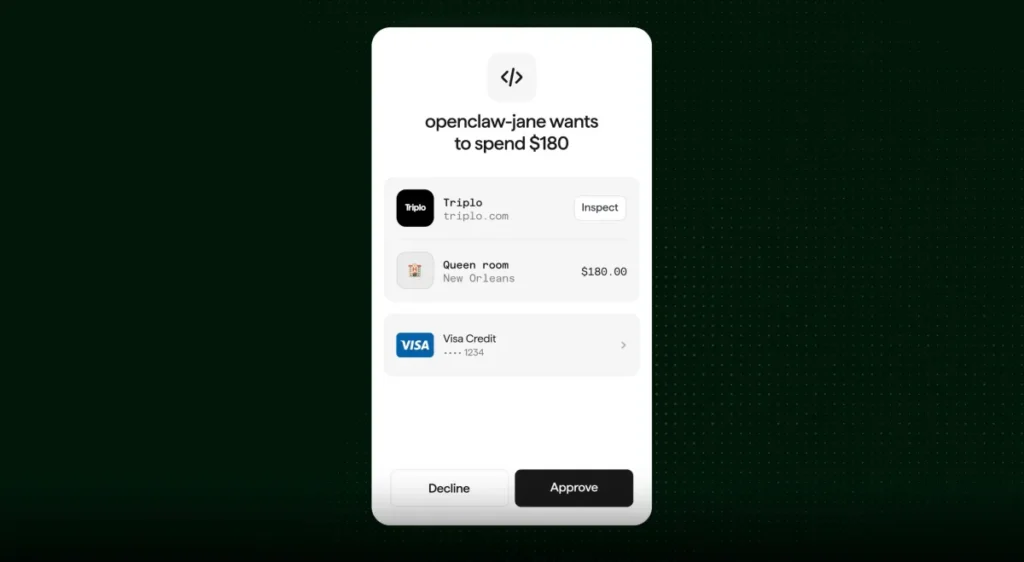

Stripe just quietly made its Link digital wallet available for AI agents. If you’re not familiar, Link is Stripe’s one-click checkout thing that stores your cards, bank accounts, and subscriptions so you don’t have to re-enter payment details everywhere. What’s new is that you can now authorize an AI agent to use your Link wallet to spend money on your behalf, with various approval controls.
This is one of those announcements that sounds trivial until you think about what it actually enables. We’ve been hearing about AI agents booking flights, ordering groceries, or managing subscriptions for years, but the practical problem has always been: how does an AI agent actually pay for something without handing over your credit card number to a black box?
Stripe’s answer is straightforward. You connect your payment methods to Link, then authorize specific AI agents to use them. The agent can initiate a payment, but you set rules around it — spending limits, merchant whitelists, approval requirements for amounts above a threshold. The flow works through Stripe’s existing infrastructure, so merchants don’t need to do anything special. If a customer pays via Link and the transaction is flagged as agent-initiated, the approval request goes to the user’s phone.
I’ve seen a few attempts at this before. There was that whole “crypto wallets for AI agents” phase, and some fintech startups tried building agent-specific payment rails. But none of them had Stripe’s merchant network. That’s the real advantage here. Stripe already processes payments for millions of businesses. Adding agent support on top of that is an infrastructure play, not a product experiment.
The approval flow is the part that actually matters. Without it, this would just be a glorified shared credit card. But Stripe lets you set granular permissions — maybe your travel agent can book flights up to $500 without asking, but anything above that needs your thumbs-up. Your grocery ordering agent can spend up to $200 per order but only at approved stores. This is the kind of control that makes agent payments viable for real people, not just tech demos.
I’m slightly skeptical about adoption speed. Most merchants don’t even know this exists yet, and consumers are still figuring out whether they trust AI agents with their money at all. But Stripe is playing the long game. They’re building the plumbing now so that when agent commerce inevitably becomes normal, they’re already the default payment method.
There’s also a security angle that’s worth mentioning. Stripe says agent-initiated payments go through the same fraud detection and dispute resolution as regular transactions. That’s table stakes, but it’s reassuring. The last thing anyone needs is an AI agent getting scammed and the user having no recourse because “the AI did it.”
What I’m most curious about is whether this will push other payment processors to follow suit. PayPal, Adyen, Square — they all have similar wallet products. If Stripe’s move proves that agent payments are a real use case, we could see a race to build the best agent-compatible checkout experience. And honestly, that competition would be good for everyone.
For now, this is a quiet but meaningful step. Stripe isn’t shouting about AI agents taking over the world. They’re just making it possible for an agent to buy you a pizza without you having to type your card number into a chatbot. That’s the kind of boring, practical infrastructure that actually moves things forward.
Comments (0)
Login Log in to comment.
Be the first to comment!