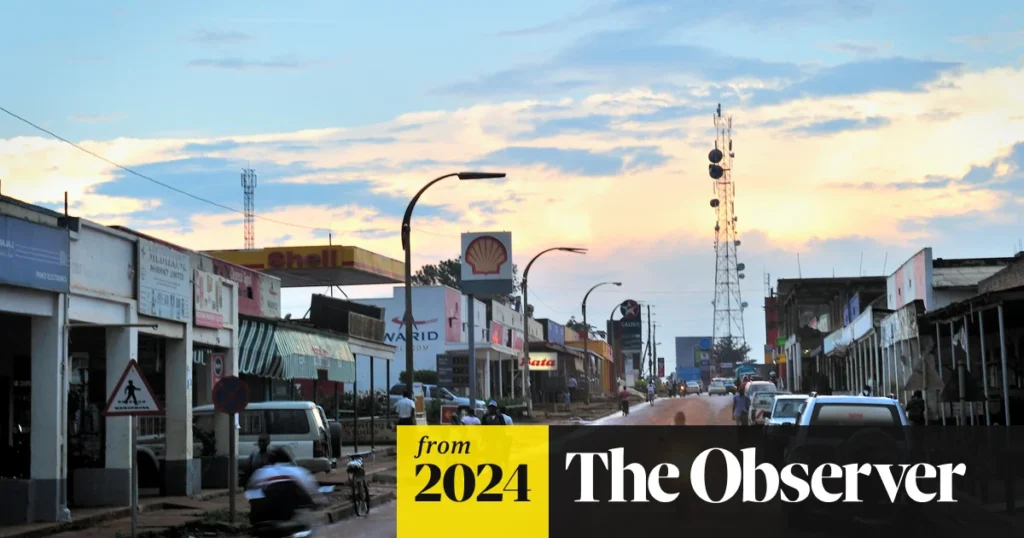

I’ve been thinking about this Guardian piece from last July ever since I read it. It’s one of those stories that sticks with you, not because it’s surprising in theory, but because the details are so brutal in practice.
The article profiles workers at outsourcing centres in Kenya and Uganda, the kind of places that handle the grunt work for Meta and other big tech companies. Content moderators and data annotators, they’re called. The people who scrub the worst of the internet so you don’t have to see it, and the people who label images and text so AI models can learn.
Meet Mercy. She was moderating content for Meta in Nairobi when a video appeared on her screen. A fatal car crash. Someone had filmed it and uploaded it to Facebook. Her job was to check if it violated guidelines. She zoomed in and recognised the face: it was her grandfather.
She ran out crying. Her supervisor came to comfort her, then reminded her she’d need to finish her shift if she wanted to make her targets. She could have tomorrow off. New tickets kept appearing — the same crash from different angles, pictures of the car, pictures of the dead. She had to keep watching.
That’s not an outlier. The researchers interviewed dozens of workers at three centres run by the same company across Kenya and Uganda. The pattern is consistent: long hours, low pay, and exposure to the kind of content that breaks people.
One worker described feeling like a walking zombie. Another said they witness suicides, torture, and rape almost every day. “You normalise things that are just not normal.” Workers are expected to process 500 to 1,000 tickets per shift. Each one requires close attention — you can’t zone out because you have to find the highest level of violation. Violence is worse than harassment, so you have to watch the whole video to see if it escalates.
When workers break down, they’re told they violated policy for not entering the right “idle” or “bathroom break” code. Productivity scores get marked down. Some have attempted suicide. Some lost their spouses. The wellness counsellor is a colleague with no formal training.
And the pay? Just over a dollar an hour.
This is the hidden infrastructure of AI. We talk about models and training data and compute, but we rarely talk about the people who make the data usable. Every time you use a chatbot or a recommendation engine or a content filter, there’s a good chance some of that work was done by someone in a centre like this, under conditions like these.
I’m not saying this to guilt anyone. I use these tools too. But I think we need to be honest about what we’re building on. The industry loves to talk about “democratising AI” and “making technology accessible,” but the reality is that a lot of the dirty work is outsourced to places where labour is cheap and regulations are weak.
The researchers who wrote the piece — James Muldoon, Mark Graham, and Callum Cant — have been documenting this for years. They’re clear that this isn’t just about one company or one country. It’s a structural feature of how the AI industry operates. The data has to come from somewhere, and the cheapest place to process it is where people are desperate enough to do this work for a dollar an hour.
Some companies are starting to talk about ethical sourcing and better conditions. But talk is cheap. Meanwhile, workers are still watching the worst of humanity, day after day, for wages that wouldn’t cover a coffee in San Francisco.
I don’t have a neat solution to offer. But I think it’s worth remembering, next time you see a headline about AI transforming the world, that transformation runs on the backs of people like Mercy. And she’s not okay.
Comments (0)
Login Log in to comment.
Be the first to comment!